By Caribo Magazine
For a long time, we have imagined language learning as a predominantly academic exercise.
Grammar books. Irregular verbs. Exercises. Conjugation tables.
A necessary path, of course. But not always a sufficient one.
Because there is a fundamental difference between knowing a language and inhabiting a language.
The first can be studied.
The second must be lived.
This distinction becomes particularly evident in Buenos Aires, one of the most distinctive cultural capitals in Latin America, where the relationship between urban space, identity, and language continues to offer a unique social laboratory.
Recoleta
In Recoleta, one of the most recognizable neighborhoods of the Argentine capital, DWS Spanish School has been operating since 1998 under the direction of Annabella Yagust, who for nearly three decades has worked with students from around the world, including many Italians who choose Buenos Aires as a place to learn Spanish.
According to Yagust, true language learning begins when the textbook stops being the center of the experience.
“In Italy you study grammar. In Buenos Aires you use it to live,” she observes.
The statement may sound simple, but it reflects a much broader cultural transformation.
In recent years, language learning has gradually moved beyond the traditional classroom-centered model toward an increasingly immersive experience. The objective is no longer limited to acquiring linguistic competence. It is about entering into a relationship with a city, its rhythms, gestures, habits, and even its contradictions.
Buenos Aires
Buenos Aires offers a particularly interesting context in this regard.
The Argentine capital maintains a deep historical connection with Italian immigration. Surnames, architecture, family traditions, ways of inhabiting public space, and even certain linguistic inflections reveal a cultural proximity that many Italian visitors immediately recognize.
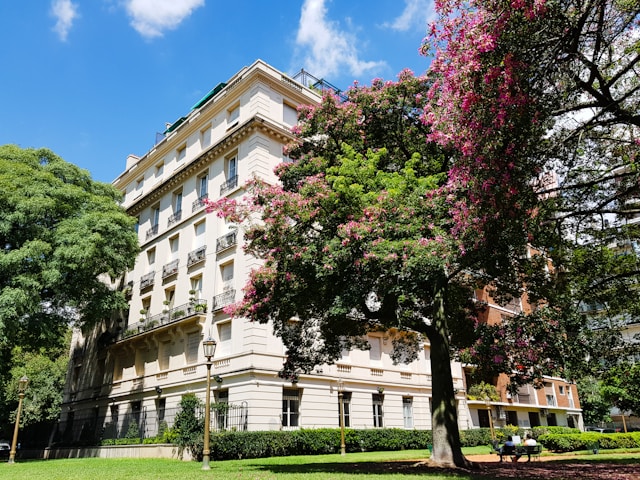
Walking through Recoleta, one encounters cafés reminiscent of Europe, historic bookstores, monumental buildings, and a neighborhood life that still preserves a strong relational dimension.
This familiarity helps.
But it does not eliminate the differences.
Because the Spanish spoken in the streets of Buenos Aires is not the Spanish found in textbooks.
There is voseo. There are local expressions. There are cultural references that can only be understood through direct experience.
This is where the neighborhood itself becomes part of the educational process.
Recoleta is not merely a backdrop.
It becomes an extension of the classroom.
Taxi driver
A conversation with a barista, a purchase at a local market, a discussion with a taxi driver, participation in a dinner among friends, or attendance at a cultural event all become learning opportunities that no theoretical exercise can fully reproduce.
It is therefore not surprising that many Italian students now arrive in Buenos Aires for reasons that go beyond a traditional language vacation.
Many are people undergoing personal or professional transitions.
Thirty-year-olds searching for new opportunities.
Forty-year-olds redefining their paths.
Professionals investing in new cultural and linguistic skills.
In such cases, language becomes something more than a communication tool.
It becomes a way of building a new relationship with the world.
Annabella Yagust herself notes that many students arrive with a solid theoretical knowledge of Spanish acquired through online courses, digital applications, or university studies.
The real challenge, however, is rarely grammar.
It is spontaneity.
Speaking without mentally translating every sentence.
Understanding an informal conversation.
Telling one’s own story using words that do not feel borrowed.
It is at this stage that the city assumes a decisive role.
The City as an Irreplaceable Classroom
Language ceases to be a subject.
It becomes an environment.
In an age characterized by distance learning, digital platforms, and artificial intelligence applied to education, experiences such as those found in Recoleta remind us that there remains an irreplaceable dimension of knowledge.
Presence.
Encounter.
Direct experience.
Perhaps this is the most interesting lesson emerging from Buenos Aires.
Languages do not live in dictionaries.
They live in cities.
In cafés.
In public squares.
In unexpected conversations.
And whenever we truly learn a language, we are not merely acquiring new words.
We are learning a new way of inhabiting the world.
DWS Spanish School was founded in 1998 by Annabella Yagust and is located in the Recoleta neighborhood of Buenos Aires, one of the principal cultural centers of the Argentine capital.